
2025–2026
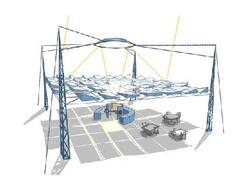
Help design and build an object that can be used to temporarily transform an urban or rural space into a welcoming area that provides comfort and harnesses solar energy to help cook food
Context
Summer is an ideal time for organizing festivals or temporary social gatherings. It is often a very sunny time of year, leading to discomfort that requires the use of effective shade structures or even cooling systems when necessary. The very solar energy from which we seek protection can help meet all or part of the energy needs associated with cooking, lighting, sound systems, etc.
Implementation 2023–2024
An initial 1:4 scale model was built, providing partial shade while harnessing solar energy for cooking.
General Project Objective and Previous Achievements
The objective of this project is to design technical solutions to address certain needs associated with this context: to propose a structural concept that can be easily disassembled and supports shading, lighting, and cooling systems, among others, and to design a system for harnessing solar thermal energy to cook food at both high and low temperatures. These two areas of study are intended to result in small-scale prototypes to validate the proposed concepts.
Work conducted in previous years has led to the construction of the supporting structure and a mesh canopy supporting bidirectionally adjustable heliostats. These heliostats reflect incident solar energy toward a mirror that focuses it onto the cooking device.
Work expected for 2025–2026
This year’s challenge focuses on three areas of development:
- design of a heliostat control system to track the sun’s path
- design of a device for adjusting the array of 25 heliostats
- design of a lightweight, portable cooking device suitable for multiple cooking methods
Evaluation
Interim [January]
- Control: design of a prototype and validation testing on a heliostat to be controlled for tilt and orientation
- Adjustment: design of a tool and an adjustment procedure for 3 positions throughout the day
- Oven: design, characterization, and simulation of operation
Final [June]
- Construction and integration into the 1:4 scale model
- Calculation notes (enabling a 1:1 model)
- Assembly and operating instructions
Supervisors
Caroline DE SA, David ETIEVANT, Guillaume LE GUERN
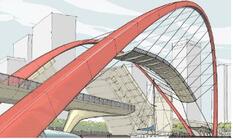
The project involves designing and building a functional prototype of a mobile pedestrian bridge. The bridge must be equipped with sensors to study its behavior under load.
Background
This footbridge project was initially proposed by the architectural firm Ross Barney Architects for installation in Chicago. The general concept of the footbridge is therefore established: an articulated deck is suspended from two movable arches. These arches tilt and swing apart to raise the deck. Although innovative and aesthetically elegant, the project never progressed beyond a few sketches.
“The Lake Shore Drive Bridge is a unique butterfly-style design combining a bascule bridge and a vertical-lift bridge. The movement of the bascule arch spans provides the mechanism to raise the 250-ft. pedestrian bridge span as a vertical-lift bridge.” [Ross Barney Architects]
Project Objective
The goal is to conduct a detailed analysis of the mechanical behavior of such a footbridge in order to design and construct it. A functional, instrumented model would demonstrate the feasibility of such a structure. The design will require an understanding of kinematics and load distribution in order to optimize the shape of the arches and their bascule mechanism. Instrumentation will be installed to study the bridge’s operation.
Expected Work
Following preliminary studies and the sizing of the selected technical solutions, the final deliverable will be a functional and instrumented model with a 1.5-meter span, accompanied by its calculation reports.
Evaluation
The evaluation will be based, on the one hand, on the project’s progress (model, functional model, or functional and instrumented model) and, on the other hand, on two types of deliverables: reports and posters presenting the design and implementation process.
Project Leaders
Clotilde CHAMBREUIL, Clément DESODT, Martin PONCELET
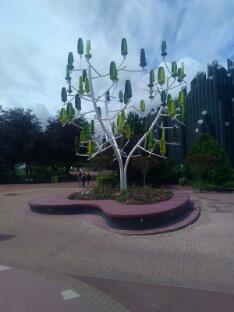
Design and build a household wind turbine with a “wind tree” structure to help small groups of people achieve energy self-sufficiency.
Background
Collaborative networks are being formed to help small groups of people achieve energy self-sufficiency. Among the best known is the Tripalium network, which uses standard-design wind turbines but on a smaller scale and with reduced power output (a single propeller with a 2- to 3-meter span and a power output of 300 to 500 W). However, the large size of the propeller and the alternator makes these devices difficult to build by hand. That is why we are turning here to a “wind tree” structure with several (10 to 20) small propellers, each coupled with a small alternator. We are aiming for a total power output of about 100 watts.
Project Objective
The objective of this project is, initially, to find technical solutions for designing and testing propellers coupled with alternators that deliver good performance while allowing for manufacturing with a low environmental impact (bio-based materials, recycled materials, etc.). Ultimately, a wind turbine 1.5 to 2 meters tall, featuring 10 to 20 propellers, will be built and tested under real-world conditions. A broader objective will be to contribute to the improvement of these DIY wind turbines by sharing our experience on collaborative networks.
Expected Work
- Design of the propeller profile structure compatible with a simple and eco-friendly manufacturing method
- Design of alternators using repurposed existing objects (e.g., PC fan motors)
- Setting up a test bench to measure the efficiency of a propeller coupled to an alternator
- Manufacturing and testing a final wind turbine comprising 10 to 20 propellers
- Online monitoring of electricity production via a web page (weather permitting)
Evaluation
Midterm (January)
- Design and fabrication of high-efficiency propeller prototypes
- Identify and implement solutions for manufacturing alternators
Final (June)
- Set up a test bench for a propeller coupled to an alternator
- Test and optimize the manufactured devices
- Build a complete wind turbine
- Test a wind turbine under real wind conditions.
Context
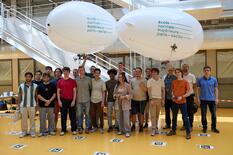
- Renewed interest in airships.
- Advantage: sustainable and fuel-efficient mobility.
- Typical missions: data collection, surveillance, transportation in inaccessible areas (without ground infrastructure), and transport of heavy and bulky loads.
Project Objective
- Optimize an airship capable of autonomously following a route and delivering a package with precision.
- Design and build a dock for recharging with helium and energy.
- Develop an autonomous navigation system that accounts for the position of the opposing airship and recharging at the dock.
Expected Work
- Study and optimization of the existing flight kinematics.
- Design and construction of a dock for recharging helium and energy.
- Development of a positioning system covering the entire Atrium.
- Dynamic modeling and control of the airship.
- Optimization of the onboard electronics.
- Challenge race: an automated round trip from the dock within the Atrium, including the precise delivery of a package while avoiding the other airship.
Evaluation
- Thematic report: flight kinematics, dock design, electronics, localization, control.
- Demonstrator and experimental results.
- Team report: one autonomous and precise airship and one functional dock per team.
2024–2025
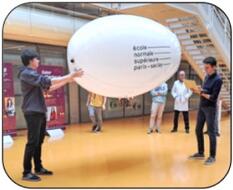
The goal of this challenge is to build an airship capable of autonomously following a route and delivering a package with precision.
Background
There is currently a resurgence of interest in airships, a sustainable and energy-efficient mode of transportation capable of carrying out a variety of missions: data collection, surveillance, transportation to inaccessible areas, and the transport of heavy and bulky loads.
Challenge Objective
The challenge consists of building an airship and piloting it to transport a package, while taking into account constraints related to energy autonomy, decision-making autonomy, and indoor geolocation.
Expected work:
optimization of existing flight kinematics (propellers, engines, batteries),
Design and construction of a new nacelle (number, power, position, and orientation of the propellers),
Design and development of grasping and placement systems (mechanical CAD, material of construction, optimization),
Implementation and improvement of the localization system (inertial measurement unit, IR rangefinder, vision + tags, indoor GPS),
Dynamic modeling and control of the airship (modeling, testing, identification, simulation, design of control elements),
Formation of three teams in the second semester (selection, development, and fine-tuning of a set of solutions).
Evaluation
The first mid-term deliverable involves producing a thematic report (flight kinematics, grasping, localization, control) and a demonstrator with experimental results.
The final deliverable consists of the design, sizing, and construction of an autonomous and precise airship. A report must be prepared. A challenge race will be conducted (an automated round trip in the Atrium with precise delivery of a package), which will be evaluated based on execution time and delivery accuracy.
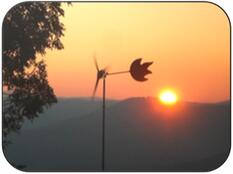
The goal of this challenge is to build homemade wind turbines and, if possible, help improve the performance of these "homemade" wind turbines.
Background
Collaborative networks are forming to help small groups of individuals achieve energy self-sufficiency (wind, tidal, solar). These networks share knowledge with one another to improve their expertise.
Challenge Objectives
The objectives are:
To build 2 domestic wind turbines (approximately 300W): with a rotor diameter of approximately 1.8 m, manufactured with low environmental impact, equipped with a battery charging system and a web page to monitor electricity production,
if possible, contribute to improving the performance of these “handcrafted” wind turbines (collaborative contribution).
Evaluation
The first deliverable expected at the midpoint consists of modeling and sizing the alternator, developing tools, techniques, and templates for manufacturing the various parts, and testing a scaled-down propeller.
The final deliverable consists of fully assembled, functional wind turbines and a web page for monitoring electricity production.
The manufactured units will be evaluated according to the following criteria:
- technical aspects (50%): generator energy efficiency, battery management efficiency, robustness (heat/cold, rain, cold wind), quality of online monitoring of production and consumption,
environmental aspects (50%): use of materials with low environmental impact (wood, metal, bio-based or recycled materials), low noise levels, consideration of bird collisions, aesthetics, impact on the landscape.
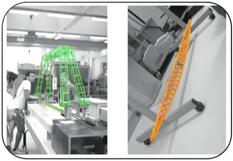
The goal of this challenge is to build an eco-friendly cable-stayed bridge.
Challenge Context
- Addressing environmental and mobility issues,
- desire for a smart engineering approach (adaptation to site constraints, material characterization and modeling, selection of an optimal structure, modeling, and construction.
Challenge Objective
The challenge consists of designing and building a cantilever bridge with an 87-meter span at a 1:87 scale (equivalent to 1 meter), while minimizing the CO2eq cost of materials and construction, complying with the geometric constraints of train clearance limits and the bridge’s visual impact, and installing it using the launch method.
Starting with:
- popsicle sticks, wood glue, string, etc.
- and an analysis of existing structures.
Expected work
State of the art,
Design/Construction of the bridge structure: characterization of available materials, numerical analysis of the structure to be built, experimental testing of various structural elements to validate the calculations,
Design and fabrication of modular components: modeling of the assembly, design and fabrication of mechanical parts.
Evaluation
The first mid-project deliverable involves constructing a bridge section supported by two abutments (maximum span of 50 cm), including a presentation of preliminary calculations (performed prior to testing), an analysis of any discrepancies between calculations and test results, and a presentation of a numerical model and a prototype of the launching system.
The final deliverable consists of the bridge ready to be launched and tested under service load!
The evaluation criteria are based on:
- mandatory items: compliance with clearance limits,
- gradual items: eco-responsible design and construction, CO2-eq cost of the materials used, CO2-eq cost of installation, optimized design, ability to withstand the service load (while avoiding overdesign), successful launch of the bridge, mechanical integrity during launch, connections between the sides, alignment/guidance, and artistic quality.
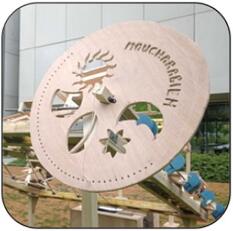
The goal of this challenge is to propose a temporary outdoor installation (in an urban setting or for festivals) that provides shade while harnessing renewable solar energy.
Context
The current environmental context calls for implementing measures to adapt outdoor areas to sunlight conditions, thereby improving comfort for users of these spaces, while seeking to harness recoverable solar energy during periods of sunlight for immediate or deferred use.
Implementation 2023–2024
An initial 1:4 scale model was built, providing partial shade while harnessing solar energy for cooking.
Challenge Objectives
The objectives are:
to study and improve the existing model by characterizing the current setup in terms of power levels and focusing capacity,
to improve comfort,
to optimize control and instrument the model,
develop a new application for the heat generated by converting it into mechanical energy.
Evaluation
The first mid-project deliverable is intended to provide an analysis report on the existing system that quantifies current performance, as well as studies and selected solutions for the two working groups focused on optimizing control and mechanical energy production.
The final deliverable consists of the design, sizing, implementation, and integration of the selected improvement solutions into the model, along with the associated calculation notes and installation and operating instructions.
2023–2024
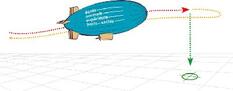
The goal of this challenge is to build an airship capable of autonomously following a route and dropping a package.
Background
There is currently a resurgence of interest in airships, a sustainable and energy-efficient mode of transportation capable of carrying out a variety of missions: data collection, surveillance, transportation to inaccessible areas, and the transport of heavy and bulky cargo.
Challenge Objective
The challenge consists of building an airship and piloting it to transport a package. Expected work:
dynamic modeling: to size the propulsion system and simulate the control system,
Characterization of a propeller propulsion system: thrust, power consumption, mass,
Characterization of a plasma propulsion system: thrust, power consumption, mass,
Evaluation of propulsion system configurations: number, position, and possible orientation of the engines,
Evaluation of indoor positioning systems: inertial navigation system, vision, radio,
Formation of four teams: project based on a common framework, with each team developing its own pod.
Evaluation
The first mid-project deliverable is a thematic report (dynamics, propulsion, propulsion system, positioning), and a demonstrator.
The final deliverable consists of the design, sizing, and construction of an operational gondola. A challenge run will be conducted (an automated round trip in the Atrium with a controlled release), which will be evaluated based on the time taken to complete the course and the precision of the release.
The goal of this challenge is to propose a temporary outdoor installation (in an urban setting or for festivals) that provides shade while harnessing renewable solar energy.
Context
The current environmental context calls for implementing measures to adapt outdoor areas to sunlight conditions, thereby improving comfort for users of these spaces, while seeking to harness the solar energy available during these sunny periods for immediate or deferred use.
Challenge Objectives
The objectives are:
to build a 1/4-scale model of a temporary, collapsible structure designed to provide shade,
to integrate into this structure a solar energy concentration system capable of powering various applications (cooking, domestic hot water, refrigeration, etc.) without relying on electrical power,
Optimize the use of this solar energy through a storage system that allows for continued use of these functions outside of periods of sunlight.
Evaluation
The first mid-project deliverable aims to propose independent technological solutions for the three subsystems to be developed: the mechanical structure, optical concentration, and energy utilization, along with integration proposals.
The final deliverable consists of the design, sizing, and construction of a prototype of the selected final system.
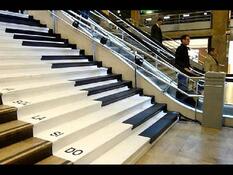
The Urban Orchestra Challenge involves creating musical instruments suited to an urban environment (parks, squares, docks, etc.).
Context
Julien Green once said, “Music beautifies the places where it is heard.” Today, art and music are integral parts of the urban landscape.
A recent example: https://www.youtube.com/watch?v=4wKyhwDwssA
Challenge Objectives
The objective is therefore to design and build a musical instrument suited to the urban environment and to test its musical performance.
Format of the Final Evaluation
On the day of the final presentation, a short musical piece must be performed on each instrument. The following criteria will be used to compare the solutions.
Challenge Evaluation Criteria
These instruments must meet the following requirements:
- Ability to withstand public use.
- Sound level between 60 dB and 90 dB at a distance of 5 meters from the instrument.
- Quality of craftsmanship.
- Widest possible range. At least one octave or at least 12 notes.
- Harmonic richness.
- No loudspeaker.
Mid-term deliverables
The team must produce a rough draft or prototype of the instrument that models the phenomenon.
Deliverable for the final defense
The complete instrument.
2022–2023
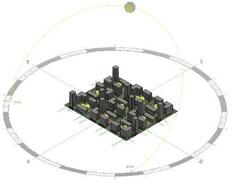
The goal of this challenge is to propose designs that enable an urban neighborhood to reduce its energy impact in a sustainable way and improve user comfort in its outdoor spaces.
Context
The current environmental context calls for the renovation of urban areas to enhance resilience, that is, adapting these neighborhoods to energy challenges—such as reducing their energy consumption—and comfort issues, such as addressing heat island effects.
Challenge Objectives
The objectives are:
to build a neighborhood model (limited to 4 buildings) using existing components, equipped with its own hot-water heating system,
to integrate into this model a management system capable of regulating its indoor temperature and measuring energy consumption,
to develop a digital twin representing the thermal behavior of this model,
Propose technical solutions to improve energy performance and comfort at the neighborhood level.
Evaluation
The first mid-project deliverable aims to prepare for the energy-efficient renovation of a building by creating a model of an unrenovated, instrumented building and its digital twin.
The final deliverable will consist of incorporating the selected technical solutions for improving energy performance and comfort into the final model of the renovated neighborhood, at the scale of the neighborhood’s buildings and outdoor spaces. The optimization of energy consumption and comfort achieved through the renovation must be measurable using control and monitoring systems.
Background
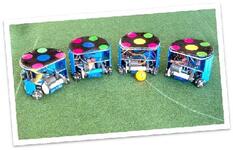
RoboCup is a global competition founded in 1997, in which teams of robots compete in soccer matches. The competition is divided into four leagues, each distinguished by the complexity of controlling the robots in play:
- Humanoid: the players are humanoid robots;
- Standard Platform: the players are NAO robots;
- Middle Size: the players are fully autonomous (decentralized control) non-humanoid robots of medium size;
- Small Size: The players are small robots: 180 mm in diameter and 150 mm in height, and they are controlled via radio from a “team coach” computer (centralized control).
Although smaller in size, the last category presents significant engineering challenges due to the limited space and the high performance requirements of the robot.
This challenge is therefore structured around these principles. Students will be divided into 5 teams, which will compete in a championship at the end of the year.
Challenge Objectives
The objective for each team is to design, build, and control a soccer team consisting of a pair of robots and their computer coach. The field and vision-based localization systems are provided.
Each team must design and improve the robots’ mechanics and electronics: developing compact wheels, optimizing the PID parameters of the servomotors, designing an adjustable shooting system, working on the power transmission of the shooting system, programming the robot, and more. To this end, teams may conduct a review of existing solutions, as the competition’s longevity and “open-data” ethos provide a wealth of reference material.
At the same time, each team must set up a decentralized control system based on information provided by the vision server, which also acts as the referee. The team will then be represented by a laptop (coach, not provided) that listens to the referee and transmits its commands to the two robots (players). The vision server/referee will provide the positions of all players and the ball, as well as some basic information such as kickoff, goal, or end of play.
To work on strategy alongside robot development, a dynamic 3D simulator is provided.
Format of the Final Evaluation
The final evaluation will be based on automated challenges: soccer plays, evasive maneuvers, etc. Matches between teams (real and simulated)
Mid-term deliverables
At the midpoint, teams will be evaluated during remote-controlled matches between teams.
The Urban Orchestra Challenge involves creating musical instruments suited to an urban environment (parks, squares, docks, etc.).
Context
Julien Green once said, “Music beautifies the places where it is heard.” Today, art and music are integral parts of the urban landscape.
A recent example: https://www.youtube.com/watch?v=4wKyhwDwssA
Challenge Objectives
The objective is therefore to design and build a musical instrument suited to the urban environment and to test its musical performance.
Format of the Final Evaluation
On the day of the final presentation, a short musical piece must be performed on each instrument. The following criteria will be used to compare the solutions.
Challenge Evaluation Criteria
These instruments must meet the following requirements:
- Ability to withstand public use.
- Sound level between 60 dB and 90 dB at a distance of 5 meters from the instrument.
- Quality of craftsmanship.
- Widest possible range. At least one octave or at least 12 notes.
- Harmonic richness.
- No loudspeaker.
Mid-term deliverables
The team must produce a rough draft or prototype of the instrument that models the phenomenon.
Deliverable for the final defense
The complete instrument.
And here are some more examples of projects...
- TomatEx - Design of a Greenhouse (2021-2022)
- Mount your bridge - Design and Construction of an Eco-Friendly Footbridge (2021-2022)
- "SAirIn-IT" - Design of an information system on the air quality breathed by occupants of an enclosed space (2020-2021)
- Earthquake-Resistant Building - Design of a model of an earthquake-resistant structure (2019–2020)
- Comfort Management and Optimization—ensuring thermal comfort in extreme conditions in an office within the ENS Paris-Saclay building (2019–2020)
- SaphTeamRacing—autonomous car race (2018–2019)
- ...